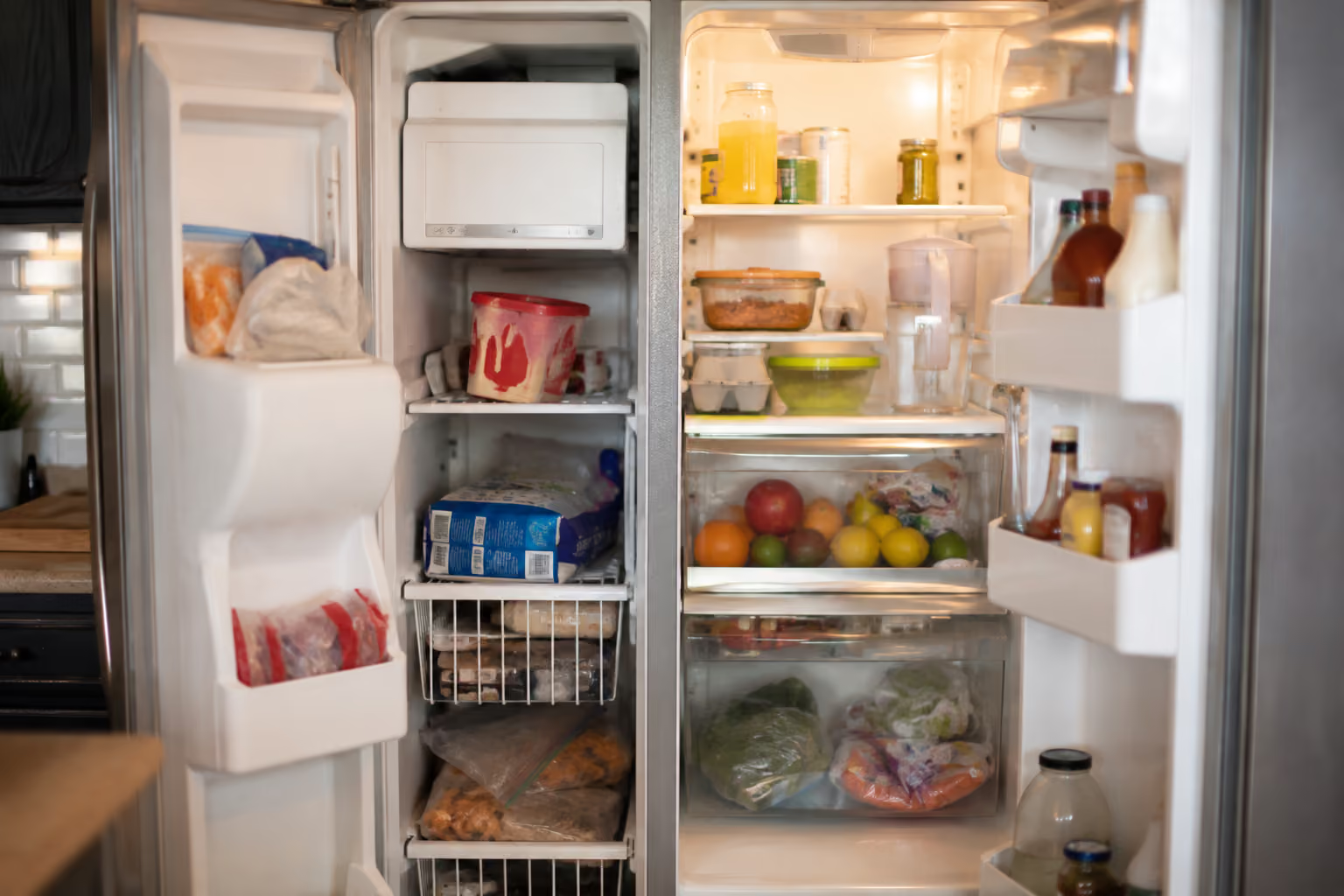
Your freezer should hold food solidly frozen at 0°F or below. If ice cream is soft, meat is partially thawed, or you notice frost building up on the walls but nothing actually freezing, something has changed inside the sealed system, the defrost circuit, or the airflow path. This is one of the most common refrigerator-related calls we handle across Chicago, Skokie, and the surrounding suburbs — and the diagnosis depends entirely on which symptom you have.
How do you tell if a freezer is broken or just struggling?
There is a difference between a freezer that has stopped working entirely and one that is partially failing. Here is how to read the symptoms:
Freezer not cold enough but still running
Food is soft or partially thawed, ice cream has a slushy texture, but the freezer motor is running and you can feel some cold air inside. This usually means the freezer is losing cooling capacity rather than failing completely. Common causes: dirty condenser coils forcing the compressor to work harder, a partially blocked evaporator fan, or a slow refrigerant leak in early stages.
Freezer completely warm — no cold at all
Everything inside has thawed. The freezer feels like a cabinet. This is a more serious failure — the compressor has stopped running, a sealed system component has failed, or there is a complete loss of refrigerant. This requires immediate attention to save food.
Freezer iced over but not actually freezing food
A thick layer of frost or ice covers the back wall or evaporator panel, but food is soft or warm. This is a defrost system failure — the ice buildup is blocking airflow so severely that cold air cannot circulate even though the compressor is running. See our dedicated article on defrost heater failure for full detail on this specific problem.
Can a freezer stop working while the refrigerator still works?
Yes — and this happens more often than most people expect. On most combination refrigerator-freezers, the freezer and refrigerator sections share a single sealed system, but cold air is generated in the freezer and circulated into the refrigerator section by a fan. When the freezer develops a fault, the refrigerator section can continue to feel reasonably cool for days or even weeks — because some cold air is still leaking through — while the freezer itself warms up or fails to freeze.
The reverse also happens: on refrigerators with separate compressors (like Sub-Zero and some LG models), one compressor can fail while the other continues operating normally. The freezer works fine while the refrigerator warms, or vice versa.
On LG refrigerators specifically — a common scenario is the linear compressor partially failing or the sealed system developing a slow leak. The refrigerator section continues to cool adequately while the freezer gradually loses the ability to maintain 0°F. If you have an LG refrigerator and the freezer is not freezing while the fridge feels fine, see our article on LG refrigerator not cooling for the specific diagnosis steps.
What are the most common causes of a freezer not freezing?
1. Defrost system failure
The most common cause of a freezer compartment that stops freezing while the compressor keeps running. The defrost heater, defrost thermostat, or control board fails, frost accumulates on the evaporator coils until they are completely encased in ice, and airflow through the freezer drops to almost nothing. The compressor works hard but cannot push cold air past the ice blockage.
Signs: Frost or ice visible on the back wall of the freezer, gradual temperature rise over days or weeks, freezer motor running constantly.
Fix: The failed defrost component must be identified and replaced. A manual defrost (unplugging for 24–48 hours) temporarily restores cooling but the ice returns within weeks if the root cause is not repaired.
2. Evaporator fan motor failure
The evaporator fan draws air across the frozen coils and pushes it into the freezer compartment. When the fan motor fails, the coils stay cold but cold air cannot circulate. The freezer warms up even though the compressor and coils are working normally.
Signs: Freezer gradually warming while the coils inside feel cold to the touch, fan not audible when the freezer door is open, sometimes a clicking or grinding sound as the failing motor tries to run.
Fix: Fan motor replacement, usually completed same day. The coils often need to be manually defrosted if ice has built up around the failed motor.
3. Condenser coils clogged with dust
The condenser coils release heat from the refrigerant. When they are packed with dust and pet hair — which happens over 12–18 months without cleaning — the system cannot shed heat efficiently. The compressor overworks, temperatures rise, and the freezer compartment gradually loses the ability to reach 0°F even though everything else appears to be functioning.
Signs: Freezer running consistently but temperature slowly rising over months, unit warm to the touch on the sides or back, compressor running almost continuously.
Fix: Full condenser coil cleaning. On most refrigerators, the condenser is accessible behind the bottom front grille. This is the one freezer maintenance task homeowners can safely do themselves with a vacuum and soft brush. If the temperature does not recover after cleaning, the compressor may have been damaged by prolonged overheating.
4. Door seal failure
A worn or torn freezer door gasket allows warm room air to enter continuously. The compressor runs constantly trying to compensate, but cannot maintain 0°F against the constant warm air infiltration. Food gradually warms. Frost often forms around the door frame where warm and cold air meet.
Signs: Frost or condensation visible around the freezer door frame, freezer running constantly, temperature slightly above 0°F rather than completely warm.
Fix: Door seal replacement. Test the current seal with the dollar bill test — close the freezer door on a dollar bill and pull. If it slides out without resistance, the seal has lost its grip.
5. Compressor failure or refrigerant leak
The most serious and expensive cause. The compressor has failed or the sealed system has developed a leak, and the refrigerant that carries cold through the system is no longer circulating. The freezer warms completely and stays warm regardless of settings.
Signs: Freezer completely warm, no cold at all inside, compressor either completely silent or running but producing no cooling, sometimes a gurgling or hissing sound indicating refrigerant movement has stopped.
Fix: Compressor replacement or sealed system repair. On LG refrigerators with a linear compressor, the compressor may still be under a 10-year warranty — check your model and purchase date before paying for this repair.
What happened on a recent Skokie service call
A homeowner in Skokie, IL called us after noticing the freezer section of their Whirlpool side-by-side refrigerator had stopped keeping food frozen. Ice cream was completely soft and meat was partially thawed, but the refrigerator section on the right side still felt cool. The compressor was running.
When our technician opened the freezer panel, he found the evaporator coils completely encased in ice — the defrost heater had failed and frost had accumulated over several weeks until airflow was almost completely blocked. The compressor was running normally but could not push cold air through the frozen coil block. He manually defrosted the coils, tested and confirmed the defrost heater had burned out, and replaced it along with the defrost thermostat.
Location: Skokie, IL
Appliance: Whirlpool Side-by-Side Refrigerator
Issue: Freezer compartment not freezing, refrigerator section still cool, compressor running
Diagnosis: Defrost heater burned out — evaporator coils completely iced over, airflow blocked
Repair: Defrost heater and thermostat replaced, coils manually defrosted, full cycle tested
Technician: Yurii
The freezer returned to 0°F within three hours of the repair being completed.
How long can food stay safe in a broken freezer?
The USDA guidelines are clear: a full freezer holds safe temperatures for approximately 48 hours after it stops working. A half-full freezer holds safe temperature for about 24 hours. Once food has thawed and the internal temperature rises above 40°F for more than 2 hours, perishable items should be discarded.
Do not refreeze meat or poultry that has fully thawed in a broken freezer unless it has been cooked first. When in doubt, throw it out.
Freezer repair in Skokie and Chicago
We diagnose and repair freezer compartment problems throughout Skokie, Chicago, Evanston, Morton Grove, Niles, Des Plaines, and Elmwood Park. Our technicians carry defrost heaters, fan motors, and door seals for most major brands on every service vehicle — most freezer repairs are completed in a single visit.
Call us or book online. We diagnose the issue, give you a clear estimate before any work begins, and back every repair with our 30-day labor warranty.
Related: Refrigerator Repair Chicago · Freezer Repair Chicago · Defrost heater failure explained · LG refrigerator not cooling · Why your refrigerator isn’t cooling