When your dishwasher won’t drain, it’s usually one of a few common problems
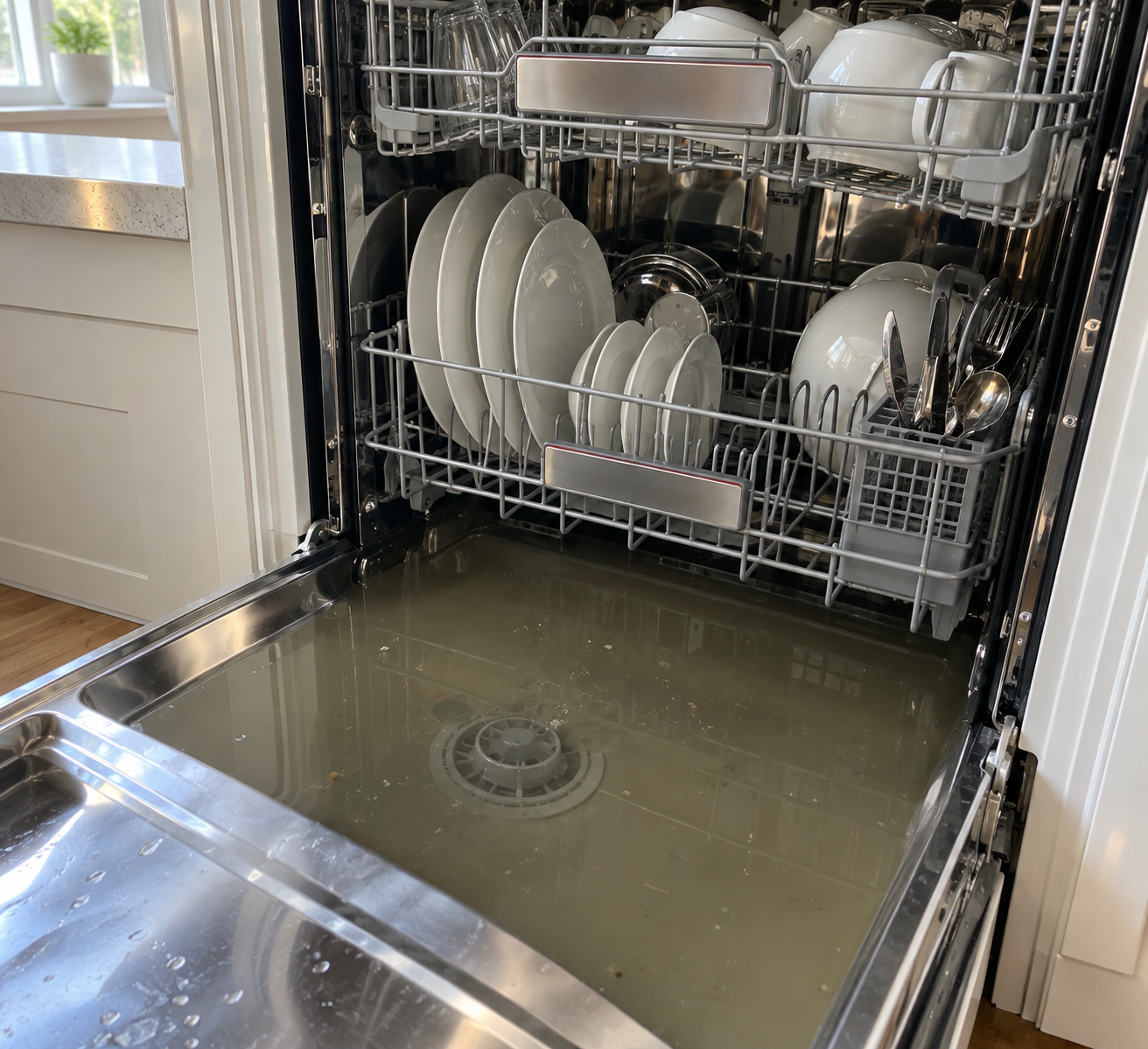
One of the most searched appliance issues we see in Evanston is “dishwasher not draining”. The symptom is simple: the cycle ends and you open the door to find dirty water sitting in the bottom. Sometimes it drains slowly. Sometimes it won’t drain at all. Either way, standing water can cause odors, poor cleaning, and leaks — and it’s a sign the drain system needs attention.
The good news: in many cases, the fix is straightforward once you identify where the restriction or failure is happening. Below is a technician-style breakdown of what typically causes this issue and what you can safely check at home before scheduling dishwasher repair in Evanston, IL.
Fast signs your dishwasher has a draining problem
- Water pooling in the bottom after the cycle ends
- Gurgling sounds from the sink or disposal during drain
- Bad smell that comes back quickly even after cleaning
- Dirty dishes because water is not fully exchanging
- Drain error codes or the cycle stopping mid-way
If you notice any of these, don’t keep running cycles. Repeated draining failures can overwork the drain pump and can push water where it shouldn’t go.
What usually causes a dishwasher not to drain completely
A dishwasher drains through a path that includes the filter area, sump, drain pump, drain hose, and (in many setups) a connection to a garbage disposal or sink drain. A problem anywhere in that chain can slow or stop drainage.
1) Clogged filter or sump area (the most common)
Food debris, labels from jars, broken glass, and even excess detergent buildup can block the filter or sump. This is the #1 cause we see for dishwasher not draining completely.
- Grease and soap film restricting water flow
- Debris under the filter preventing proper suction
- Small objects (seeds, bones, glass) lodged in the sump
What to do: Remove and clean the filter with warm water and a soft brush. Carefully inspect the sump area (with power off). If you find glass or hard debris, use gloves and avoid reaching into tight areas.
2) Kinked or partially blocked drain hose
The drain hose can kink behind the dishwasher during installation or slowly clog with grease over time. Even a partial restriction can leave standing water.
- Hose bent too sharply behind the unit
- Grease buildup narrowing the hose interior
- Improper routing that prevents a good drain loop
Tech note: Many drainage complaints come from a hose that looks fine but is restricted internally. A technician will often test flow and check the routing to ensure it’s not fighting gravity.
3) Garbage disposal plug not removed (new installs)
If your dishwasher drains into a garbage disposal and the disposal was recently replaced, the knockout plug inside the disposal inlet must be removed. If it’s still in place, your dishwasher may drain poorly or not at all.
Good to know: This is common after kitchen remodels or disposal swaps — and it’s an easy fix when caught early.
4) Clogged air gap or drain connection under the sink
Some Evanston homes have an air gap mounted near the faucet. If it’s clogged, water can back up. Even without an air gap, the drain connection can collect buildup over time.
- Water leaking from the air gap cap
- Slow drain with gurgling at the sink
- Backflow into the dishwasher
Cleaning the air gap and checking the connection can resolve many “mystery” drain issues.
5) Failing drain pump
If the drain pump is weak, noisy, or electrically failing, the dishwasher may attempt to drain but can’t push water out completely. This often shows up as intermittent draining — some cycles finish, others don’t.
- Humming sound but little or no drainage
- Drain error codes on the display
- Water remaining even after a “cancel/drain” command
When we repair it: We test the pump, check for obstructions in the impeller, and verify voltage/control signals. If the pump is failing, replacement is typically the most reliable solution.
6) Drain valve / check valve issues
Some models use a drain valve or check valve to prevent backflow. If it sticks or fails, water can remain or drain inconsistently.
This is one of those problems that can look like a clog, but the real issue is a component that isn’t opening or sealing properly.
What you can safely try before calling a technician
Here are quick steps that are generally safe for homeowners. If at any point you see leaking, burning smell, or electrical issues, stop and schedule service.
- Run “Cancel/Drain” once: Listen for a strong drain sound for 30–90 seconds.
- Clean the filter: Remove, wash, and reinstall correctly (make sure it locks in place).
- Check the sink connection: Look for a clogged air gap or a blocked disposal inlet.
- Inspect for kinks: If you can safely access behind the unit, confirm the hose isn’t crushed.
If the dishwasher still won’t drain completely after these steps, the issue is usually deeper in the drain system (pump, internal blockage, valve, or control problem).
Why “dishwasher not draining” often comes back without a proper fix
Many people clear the standing water and the dishwasher works for a week — then the problem returns. That’s usually because the root cause wasn’t addressed (for example, grease buildup in the hose, a weak pump, or recurring debris from an overfilled filter area).
For long-term reliability, we focus on the full drain path: filter, sump, pump performance, hose routing, and sink/disposal connection — so the dishwasher drains fast and consistently.
Need dishwasher repair in Evanston, IL?
If your dishwasher won’t drain completely, don’t wait until it overflows or causes water damage. Our local technician can diagnose the cause, clear restrictions, test the drain pump and related components, and get your dishwasher draining properly again.
Call to schedule dishwasher repair in Evanston or book online — we’ll confirm your appointment and help you get back to clean, dry dishes without standing water.